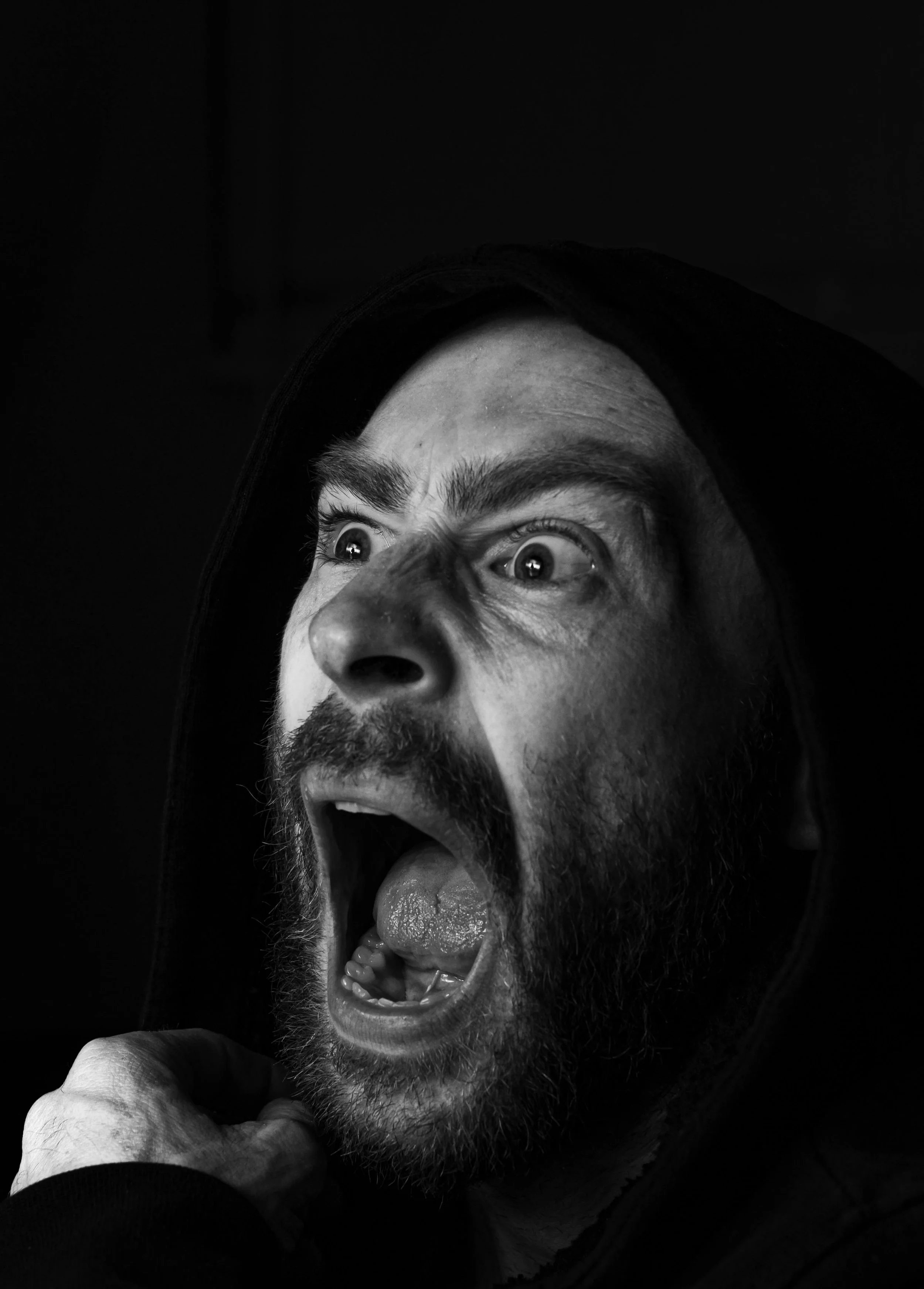
Why Are We So Afraid of Clowns?
The fear of clowns, known as coulrophobia, is a deep-rooted negative physiological response that often comes from a place of exposure or trauma. Whether you avoid watching horror films with smiling clown characters or avoid them at birthday parties, something about strangers wearing painted faces and colorful costumes feels inherently uncomfortable.
It is not enough, though, to simply say that clowns create fear because of our introduction to them in childhood.
The broader reason why we are so afraid of clowns is much more complex.
Why Clowns Feel Wrong to Some People
Have you ever noticed that a clown's expression is fixed? Yes, they may be smiling, laughing, or wearing a classic fake frowny face, but the makeup hides the small facial clues that judge intent. For example. Let's say the clown is smiling, but are they actually happy? Behind the drawn-on, painted red lips, they could be happy, bored, or maybe even angry… and watching too closely.
This uncertainty is what sits at the center of the psychology behind fear of clowns. As human beings, we are good at scanning faces for danger. Even if that looks different for each person, such as the case in some neurodivergent individuals, in which threat detection operates in different visual or cognitive pathways. Thus, if a face is exaggerated, masked, or emotionally mismatched, the brain may treat it as suspicious before a clear and specific reason is understood. Thus, if a face is exaggerated, masked, or emotionally mismatched, the brain may treat it as suspicious before a clear and specific reason is understood.
Of course, the strangeness of the clown's appearance is a small fraction of the possible causes that can cause clown fear. A 2023 study on clown fear noted that several factors may overlap:
Distorted facial features: oversized mouths, painted eyes, false noses
Unpredictable behavior: sudden movement, tricks, loud noises
Masked identity: the person underneath is partially hidden
Forced cheerfulness: happiness that does not feel natural
Learned fear: friends or family members introduced the fear, and it became shared
Childhood association: an early frightening encounter may leave a mark
Interestingly enough, the study found that childhood association is one of the least common reasons the fear develops. Overall, it is a fear that can vary from person to person, but the overall pattern is that clowns simply look….off.
Fear of Clowns Symptoms
Understanding the gripping fear that comes with coulrophobia means learning what happens after fear sets in. Of course, there is the most obvious symptom of avoidance: circuses, attractions, and birthday parties where a clown may be present, but fear of clowns can also cause:
Rapid heartbeat
Sweating
Nausea
Trembling
Shortness of breath
Dread or panic
Anger or crying in children, occasionally adults
While this is not an exhaustive list, and certainly there can be symptoms that might be rare, such as dissociation, it does help writers and filmmakers understand the reaction someone has when they see a clown face to face.
Real-Life Incidents and Clown Panics
It is important to note that these fears are not completely unfounded because there have been horrifying clowns in the real world.
Perhaps the most infamous of these is John Wayne Gacy, who helped cement the “killer clown” image in popular culture. He murdered at least 33 young men and boys and sometimes performed at community events as “Pogo the Clown,” although he was not known to wear the costume while committing his crimes.
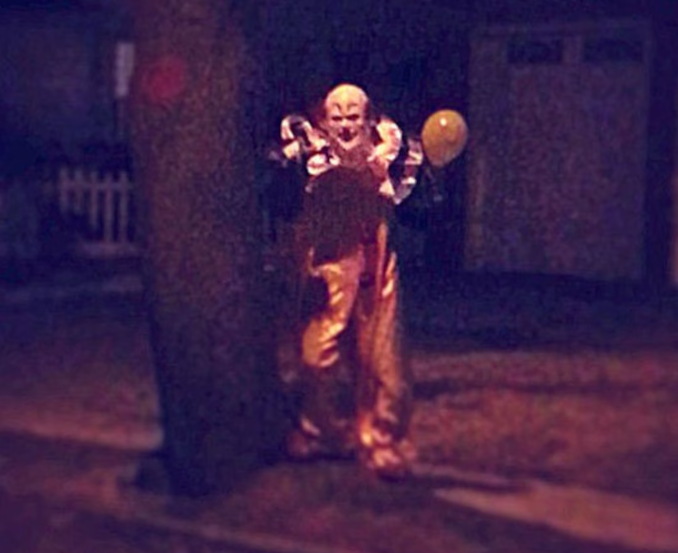
An individual dressed as a clown during the 2016 clown panic
A more literal example is Sheila Keen-Warren, who dressed as a clown, delivered flowers and balloons to Marlene Warren’s home, and fatally shot her in 1990. She pleaded guilty to second-degree murder in 2023. Cases like these are extremely rare, but their disturbing details have strengthened the association between clowns and real-world violence.
One of the most recent examples of real-life clown terror is the 2016 “creepy clown panic,” which began in the United States and then spread to other countries. Some of these reports were merely pranks, but others of these costumed clowns engaged in far more sinister behavior. For example, a clown might stand menacingly in the driveway of a stranger or chase down a moving vehicle with a chainsaw.
What began as someone's idea of a joke grew into full panic from sightings, social media posts, and general public anxiety, even when many claims were exaggerated or unverified.
While all of these incidents alone are scary for the victims who experienced them, it is also psychologically interesting that they feed into the fear of clowns overall. A phobia does not need frequent real danger to survive. It needs memorable danger.
A few strange incidents, repeated through news and online posts, can make the image feel more threatening than it statistically is. The clown then becomes less of a performer and more of a possibility of perceived danger.
Scary Clowns in Media
While real-life criminals and killers can provide a framework for fear, horror keeps the clown terror going. The most obvious and recognizable horror icon associated with fear is Pennywise from It. While Pennywise is not actually a clown, and instead an otherworldly demonic being, the creature is canonically a representation of individual fear. So it makes sense that Pennywise resonates with each generation of audiences, including the most recent Welcome to Derry series.
Films like Poltergeist and Zombieland show that a clown only needs to be briefly shown, instead of front and center, to be an effective tool of fear. The scares in these films are based solely on association.
Other films show that the clown does not have to be downright scary to be an effective horror tool. For example, KillerKlowns from Outerspace uses humor and silliness to create iconic horror characters, while Terrifier pushes the clown archetype away from either comedy or outright fear and into the territory of menace. Of course, Art the Clown could be considered more mime-like than clown-like, but the point still stands.
These portrayals, whether the clown is horrifying or humorously scary, still twist something familiar. The clown already looks artificial and uncanny. Horror only has to remove guardrails around the form.
To that extent, media does not create every fear of clowns, but it gives the fear a shared image. Even people who have never met a frightening clown may know exactly what one is supposed to look like.
Coulrophobia Treatment
Now that we have established what causes someone to be afraid of clowns and what symptoms that might produce, let's examine what someone can do about their clown fear.
Typically, coulrophobia treatment will follow the same approach that is used for other specific phobias. This is often through either exposure therapy or cognitive behavioral therapy.
Exposure Therapy
The goal of exposure therapy is to gradually introduce triggering objects or situations to the individual who experiences anxiety or fear surrounding them. In the case of coulrophobia, a therapist or psychologist may first introduce something associated with a clown, such as a spinning rainbow bow tie or a foam red nose. Once is able to interact with these objects without fear, then an image or images of a clown might be introduced.
Exposure continues until the individual is able to be in the same space as a clown or even interact with one up close.
Cognitive Behavioral Therapy
When it comes to cognitive behavioral therapy, the goal is to examine the thoughts attached to the perceived fear and reduce avoidance over time. Thus, a cognitive behavioral session may include talking about childhood experiences, whether good or bad, involving clowns or perhaps diving into what a clown might represent in a psychological sense.
Aside from therapy approaches, a psychiatrist or a medical doctor may prescribe anti-anxiety medication. Or, for someone who has a mild fear, avoidance may be all that is needed.
Why the Fear of Clowns Persists
So, why are we afraid of clowns? Because they sit in the uncomfortable space that exists between the familiar and the hidden. For some, it is because a clown smiles too much. For others, it is because they are too good at hiding their intentions.
For many, the fear comes from the clown's ability to adhere to rules that are not quite ordinary. Of course, it should be noted that most clowns are simply entertainers doing their job, but the brain is not always interested in fairness. A fixed grin, a painted smile…or simply a stranger pretending to be joyful underneath a colorful costume can all make instinct decide caution is the answer.
Using Clown Imagery in Your Horror Work
Because of the connotations outlined above, the clown can be an effective tool for horror. However, when using the clown as a mechanism for fear, it is best to focus on both:

An example of a normal clown, who is merely passing out balloons and not intentionally striking fear
The Person Afraid of Clowns
When you dive into what makes someone afraid of clowns, you need to do more than describe their terror. You must understand how their unique fear responses shape who they are as a character and why they react the way that they do. Use what we have explored together here and make your character fully three-dimensional. Remember the fear is only secondary to their personhood.
The Clown Itself
When creating horror icons, they usually fall into two groups: those that are fully 3-dimensional and those that are memorable because of their personality, attire, or something else that makes them unique. Thus, if you choose not to give your clown a backstory or sense of being, then you had better make sure that this clown is iconic. That is truly what separates that strike fear and the horror clowns that are unintentionally funny because of just how bad the concept is.
Viewing both sides of the coin can make your horror work more effective and more likely to create fear in the hearts of the audience.
Frequently Asked Questions About Coulrophobia
Is coulrophobia the same as finding clowns creepy?
No. Someone can find clowns unsettling without experiencing a phobia. Coulrophobia involves a stronger fear response that may cause distress, physical symptoms, avoidance, or interference with everyday activities.
Is coulrophobia an anxiety disorder?
Coulrophobia is not named as a separate disorder in the DSM-5. However, a severe and persistent fear of clowns may be diagnosed as a specific phobia, which is a type of anxiety disorder.
Why do clown masks feel more frightening than ordinary faces?
People rely on facial expressions to judge emotion and intent. Clown makeup and masks can conceal those signals by replacing a natural expression with a fixed smile. This creates uncertainty about whether the person underneath is friendly, angry, or potentially dangerous.
Is fear of clowns connected to the uncanny valley?
Possibly. The uncanny valley describes the discomfort caused by something that appears almost human but does not look or behave entirely naturally. A clown’s distorted features, pale makeup, oversized mouth, and exaggerated eyes may create a similar reaction.
Are coulrophobia and the fear of dolls related?
Fear of clowns, dolls, mannequins, puppets, and masks may overlap because each involves a humanlike face that appears artificial or emotionally unreadable. However, someone who fears clowns will not necessarily be afraid of these other figures.
What physical symptoms can a fear of clowns cause?
A person encountering a clown may experience a racing heart, sweating, trembling, nausea, muscle tension, shortness of breath, or an urge to escape. The severity of these symptoms can range from mild discomfort to a panic attack.
Can horror movies create a fear of clowns?
Horror movies, books, news stories, and other frightening portrayals can teach or reinforce an association between clowns and danger. However, media exposure is unlikely to affect everyone equally, and it may strengthen fears that already exist rather than create them on its own.
Why are medical clowns sometimes frightening to children?
Medical clowns are intended to reduce stress, but some children may find their exaggerated appearance and unfamiliar behavior overwhelming. Fear may be stronger in a hospital because the child is already anxious, uncomfortable, or surrounded by unfamiliar people.
Does coulrophobia become less severe with age?
Clown fear can change with age, but it does not follow the same pattern for everyone. Some childhood fears fade as a person gains context and experience, while others continue into adulthood or become stronger through avoidance and repeated negative associations.
When does a fear of clowns require professional treatment?
Professional support may be helpful when the fear causes intense distress, panic symptoms, persistent avoidance, or disruption to everyday life. Cognitive behavioral therapy and gradual exposure are commonly used to treat specific phobias.