What Happens in the Body During Fear?
More often than not, you only notice fear as a concept until it has already taken hold. The physical symptoms will manifest first: a change in breathing, your chest tightens, and the overwhelming feeling that something is not quite right.
Oftentimes, symptoms will appear even before our brain processes what is going on, and especially before the situation is fully understood. For example, if you enter a parking lot at night, the hair on the back of your arm may stand up before you see someone crouched near your car.
That delay is central to what happens in the body during fear.
The Signal Before the Feeling
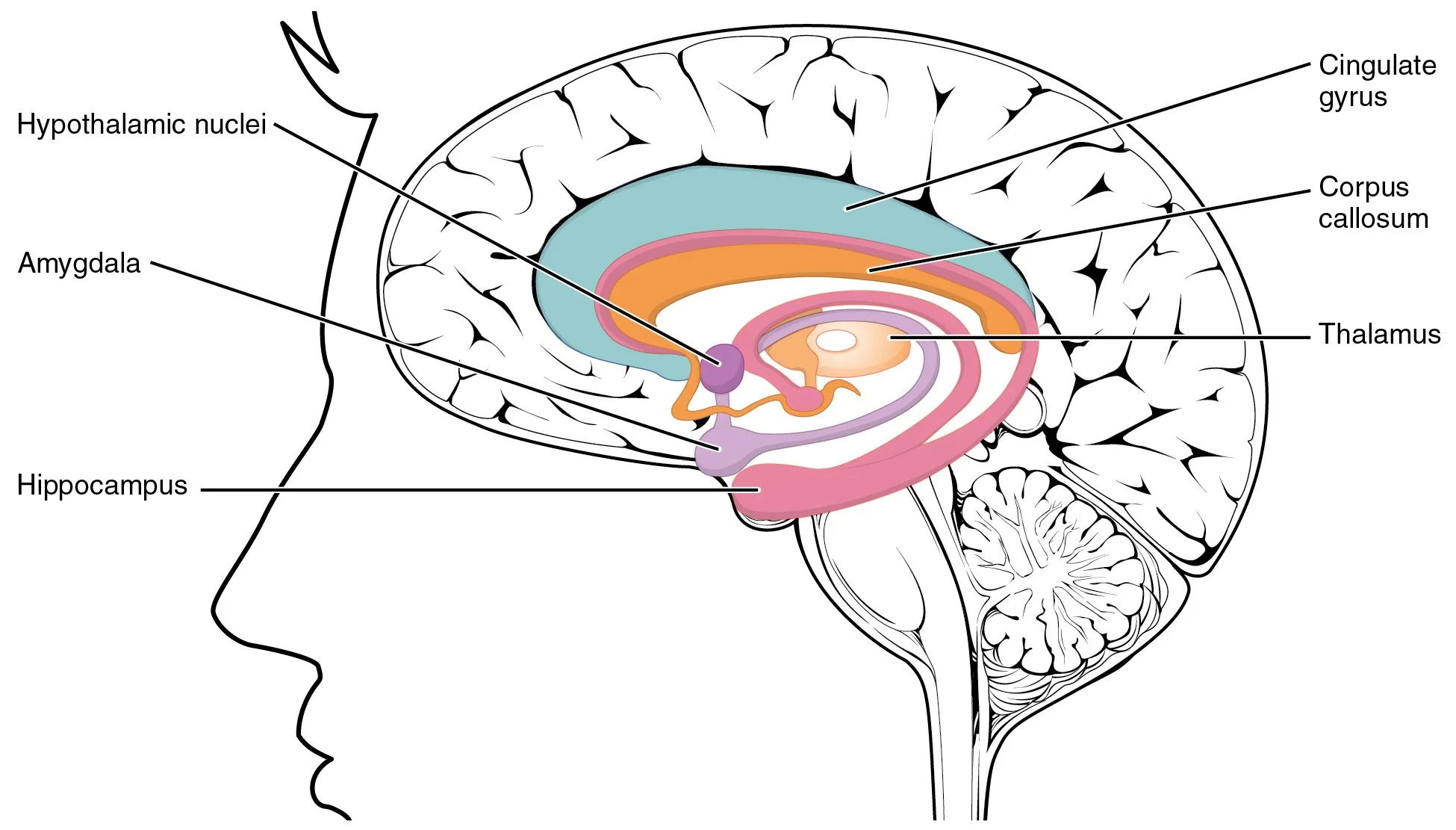
Fear begins in the brain, but not in the part responsible for logic or reasoning. The amygdala acts first, scanning for potential threats and reacting to anything that feels even slightly out of place.
This reaction can be triggered by something obvious, like a loud noise, but it can just as easily come from something subtle. For example, a mere shift in lighting can trigger a deep, unsettled feeling. Another example might be movement in peripheral vision or a sound that does not quite match its surroundings.
Before the mind has time to confirm what is happening, the signal has already been sent. Research from Harvard Medical School explains that the amygdala can initiate a fear response before the brain fully processes sensory input, prioritizing speed over accuracy.
The Body Moves Before You Decide
Once that signal is triggered, the body does not wait for instruction. It shifts into a state designed for immediate response, driven by the biology of fear.
Adrenaline is released, followed by cortisol, and together they begin to reshape how the body functions in real time. The changes are not random. They are targeted:
Heart rate increases to circulate oxygen more efficiently.
Breathing becomes faster to support that demand.
Muscles tighten in preparation for movement.
Pupils dilate to sharpen visual input.
At the same time, processes that are not immediately necessary begin to slow. Digestion pauses. Fine motor control decreases. The body is prioritizing speed and strength over precision.
This response is often referred to as the fight-or-flight system, which takes on four different forms:
Fight: You lash out and defend yourself, even if you are not naturally a fighter.
Flight: You try to get out of the situation as quickly as possible. Often, this can be outright running.
Freeze: Your body fails to react completely, and you essentially press pause.
Fawn: You try to appease the threat, whether by submission or by favor.
For creative types, this response will say a lot about how your story is framed. Is your protagonist more likely to throw a punch or take off running? How would you respond? By knowing how this might relate to your personality, you get an idea of how this works for your narrative and the characters within it.
When the Body Feeds the Fear
The physical sensations that follow often feel like confirmation that something is wrong, even when the original trigger is unclear.
This is where the biology of anxiety becomes difficult to separate from fear itself. The body produces signals, and the brain interprets them as evidence.
You might notice:
A rapid or irregular heartbeat
Tightness in the chest or throat
Shaking or muscle tremors
Dry mouth or difficulty swallowing
None of these are dangerous on their own, but they feel urgent. That urgency can create a feedback loop where the response intensifies simply because it is being noticed.
In other words, the body reacts, and then reacts again to its own reaction.
How Perception Shapes the Response
Keep in mind that fear does not rely on reality alone. It depends heavily on interpretation, whether on the threat itself, the environment, or something in between.
The psychology of fear explains why two people can experience the same situation differently. One might dismiss it immediately, while the other reacts as if the threat is real. Again, you should always think of how different fear responses might change depending on personality, upbringing, or environment.
Case in point, a shadow in a familiar place is easy to ignore, but the same shadow in an unfamiliar setting is harder to explain away.
Always remember that the body responds to what it believes is happening, not just what is actually there.
Returning to Baseline
Once the brain determines that the threat has passed, the body begins to shift back. Heart rate slows. Breathing steadies. Muscles release tension gradually rather than all at once.
This process takes time.
Adrenaline does not disappear immediately, and cortisol lingers in the system. Even after the danger is gone, the body may still feel unsettled: shaky, tired, or just a little off balance. This isn’t just for extremely situations, but everyday ones as well.
Think of the last time you had a bad interview. You probably knew early on it wasn’t going well, especially because of the interview’s tone and energy, and that you weren’t getting the job. Even if you didn’t want it, the tension from the experience likely stayed with you long after the interview ended.
That’s because your body remains in threat mode, even when there is nothing wrong anymore. Once it reacts, it is difficult to convince it that nothing happened at all.
That delay, between reaction and understanding, is where fear tends to linger and where your scenes are the strongest. Not in the event itself, but in the body’s refusal to let it go right away.