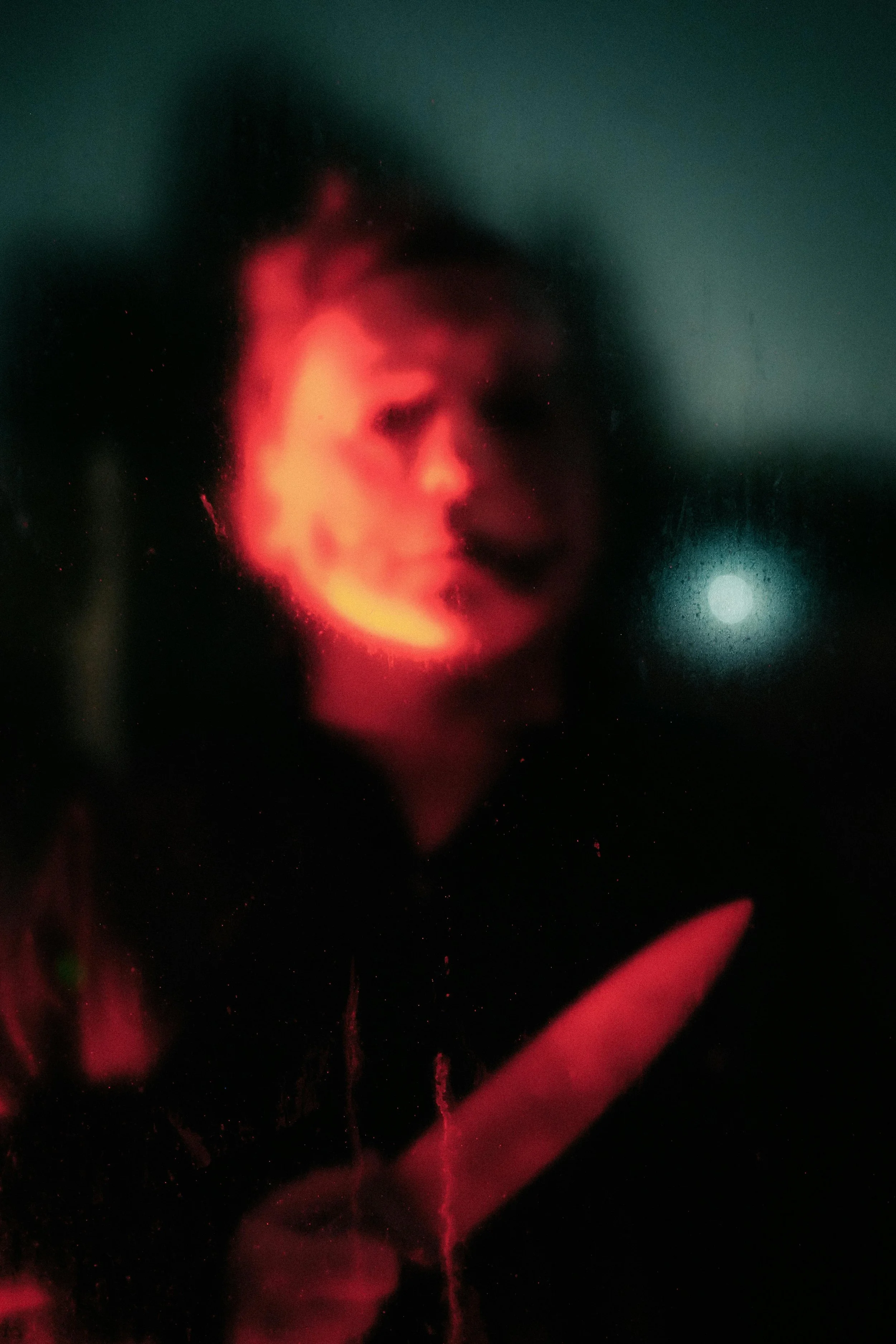
Why Do We Like True Crime?
You know the feeling. It is 2:00 AM, the room is dead silent, and you are four episodes deep into a docuseries about an unidentified killer who operated three states over in 1987. Your heart is racing, your room is dark, and logically, you know you should turn the screen off and go to sleep.
Instead, you click "Next Episode."
Why do we do this to ourselves? Fictional slashers are one thing. We know Michael Myers is an actor in a rubber mask taking direction from behind a camera. But true crime asks us to look at real blood, real grief, and real predators.
It turns out that our obsession with true crime isn't just a quirky binge-watching habit. It is a complex cocktail of evolutionary biology, brain chemistry, and psychological processing. We aren't necessarily broken for wanting to look at the dark stuff—our brains might just be trying to keep us alive.
Adrenaline, Dopamine, and the "Safe Thrill"
When you hear a floorboard creak in a true crime documentary, your body doesn't immediately stop to check whether the danger is real or playing through a flat-screen TV.
Your amygdala—the brain’s alarm system—fires off an alert signal. Within milliseconds, your sympathetic nervous system kicks into overdrive:
Adrenaline floods your bloodstream, boosting your heart rate and sharpening your vision.
Cortisol spikes, mobilizing energy reserves so you are ready to fight or run.
Endorphins release to dull potential pain.
This is the classic fight-or-flight response.
So why does this feel exciting rather than terrifying when sitting on the couch? The answer lies in context.
Your prefrontal cortex—the logical, thinking part of your brain—evaluates the situation almost as quickly as the amygdala reacts. It registers that you are safe under a blanket with a locked front door.
Once your brain recognizes that there is no immediate physical danger, the rush of adrenaline mixes with a release of dopamine (the brain's reward chemical). Psychologists refer to this phenomenon as a "safe thrill" or benign masochism.
Is True Crime an Evolutionary Survival Strategy?
From an evolutionary standpoint, paying attention to danger kept our ancestors alive. The brain is naturally wired with a negativity bias. It prioritizes information about threats over information about rewards because missing a threat carries a far higher cost than missing a meal.
Psychologists and evolutionary scholars suggest that true crime functions as a form of threat simulation.
By watching or listening to how a predator operates, your brain subconsciously collects data:
What tactics did the offender use to isolate the victim?
What warning signs or "red flags" were ignored?
How did the survivor manage to escape?
This dynamic helps explain a well-documented demographic trend in media consumption: women make up the primary audience for true crime content.
Study after study shows that women consume true crime books, podcasts, and documentaries at significantly higher rates than men.
From a physiological and sociological perspective, women are statistically far more likely to be the victims of intimate partner violence and stalking. Consuming true crime serves as a low-risk way to learn behavioral patterns, identify potential threats, and mentally rehearse survival strategies. It is less about enjoying the violence and more about mastering the anxiety surrounding it.
From Penny Dreadfuls to Podcasts: A Short History of Crime Obsession
Public fascination with real violence is not a creation of Netflix or modern podcasting. The medium changes, but the core human drive remains identical.
18th-Century Execution Broadsides
1700s
Cheap, single-sheet prints sold at public executions detailed the crimes, trial confessions, and final words of condemned criminals. They combined moral warnings with graphic sensationalism for public consumption.
The Era of Penny Dreadfuls
1830s - 1890s
In Victorian Britain, cheap serial publications offered exaggerated, highly dramatic tales of real and fictional crimes. Stories like Sweeney Todd captivated working-class audiences hungry for urban gothic thrills.
Yellow Journalism and Tabloids
1920s
Mass-circulation newspapers leaned heavily into sensational murder trials, photojournalism from crime scenes, and dramatic headlines, turning high-profile defendants into national media figures.
The Modern True Crime Explosion
2014 - Present
The launch of investigative podcasts like Serial and streaming series like Making a Murderer transformed the genre, turning passive readers into active "armchair sleuths."
Popular True Crime Media: Podcasts, Docuseries, and the Streaming Boom
The explosion of digital media has fundamentally changed how we consume real-world dark stories. True crime is no longer restricted to late-night broadcast television news or printed paperbacks; it spans a multi-million-dollar entertainment ecosystem across podcasts, streaming networks, and social media platforms.
How different formats shape the way our brains experience crime stories reveals a distinct shift in audience dynamics:

Investigative Audio Podcasts (Serial, In the Dark, Casefile)
When Serial launched in 2014, it established the blueprint for modern investigative audio. Audio creates an intimate connection—a host whispering recorded court testimony, 911 calls, or witness interviews directly into your earbuds. Without visual distractions, the listener’s brain fills in the spatial details, heightening suspense and driving narrative transport. Shows like Casefile lean into single-narrator minimalism, while investigative podcasts like In the Dark highlight systemic flaws in law enforcement and the justice system.
Conversational and Comedy-True Crime (Crime Junkie, My Favorite Murder, Morbid)
One of the most popular—and debated—subgenres blends true crime storytelling with informal host banter. Hits like Crime Junkie, My Favorite Murder, and Morbid format violent cases like two friends chatting over coffee. Psychologically, this acts as an emotional buffer: hearing hosts react with outrage, dark humor, or sympathy gives the audience permission to process terrifying subjects without feeling overwhelmed by dread. However, critics point out that casual banter around real homicides can sometimes cross into flippancy if not carefully balanced with victim respect.
Streaming Docuseries (Making a Murderer, The Jinx, The Staircase)
Streaming platforms revolutionized visual crime storytelling by replacing the sensationalist tone of 1990s tabloid shows with cinematic, episodic deep dives. Series like Making a Murderer and The Jinx treated real trials with the narrative pacing of fictional thrillers, utilizing cliffhangers, archival footage, and legal drama to keep viewers hooked. This multi-episode format allowed audiences to examine reasonable doubt and judicial misconduct in unprecedented detail.
4. Dramatized Biopics (Extremely Wicked, Shockingly Evil and Vile, Monster: The Jeffrey Dahmer Story)
Dramatizations hire professional actors to re-enact real crimes. While highly rated, scripted true crime representations face intense ethical scrutiny. Unlike documentaries using actual trial footage, biopics cinematicize real trauma, often blurring the line between artistic character study and perpetrator glorification.
Memorabilia, Gore Hounds, and the Commercialization of Death
There is a distinct line between wanting to understand the mechanics of a crime and wanting to own a piece of it.
For most horror fans, morbid curiosity stays strictly within the boundaries of simulation. We buy movie tickets, collect vintage slasher posters, stream dark podcasts, or rewatch forensic docuseries. We seek out the controlled adrenaline rush of a scare, secure in the knowledge that the blood on screen is corn syrup and the bodies are paid actors.
However, a vocal subculture actively seeks out real-world violence. When the drive to observe turns into a desire to own, trade, or consume real-world human suffering, morbid curiosity crosses an ethical line.
The Rise of Shock Cinema: From Faces of Death to Traces of Death
Long before shock sites flooded the early internet, "gore hounds"—a term originally used for extreme horror fans—sought out real-world graphic footage through underground tape-trading networks and exploitation cinema.
The mainstream breakout of this trend occurred in 1978 with the theatrical release of Faces of Death. Marketed as a banned, authentic compilation of human mortality, the film gained a notorious reputation in neighborhood video rental stores.
In reality, media scholars and special effects crew members have long confirmed that a significant portion of Faces of Death was staged:
Faked reenactments utilized theatrical props and practical effects (such as the famous monkey brains scene).
Staged sequences were blended with authentic newsreel footage of accidents and slaughterhouses to trick audiences.
While Faces of Death functioned largely as an exploitation hoax, it created a lucrative market for unedited visual trauma. By the 1990s, the direct-to-video series Traces of Death (1993) removed the fake special effects entirely. Traces of Death compiled raw, uncredited footage of real autopsies, fatal accidents, war violence, and crime scenes, from strangulation to drowning, set to heavy metal soundtracks.
By stripping real victims of their anonymity, context, and consent, these compilation tapes transformed human death into a shock-value product. They laid the visual framework for modern shock sites and extreme internet subcultures.
The Business of "Murderabilia"
When the fascination shifts from screen media to physical objects, it enters the market of murderabilia, a term coined by victim advocate Andy Kahan to describe items collected from or created by violent offenders.
The murderabilia market includes:
Handwritten letters, artwork, and personal clothing from convicted killers.
Trimmings of hair, soil from burial sites, and household items owned by offenders.
Autographs, legal documents, and personal possessions sold from prison.
For collectors, these items function as dark artifacts—tangible connections to notorious crimes. However, criminologists and ethical media analysts emphasize that this market creates a predatory feedback loop
While major platforms like eBay officially banned the sale of murderabilia in 2001 following public pressure, the industry continues to operate through private auction websites, specialized dealers, and direct outreach to incarcerated criminals.
Dark Commercialization: The Museum of Death
The physical manifestation of this subculture appears in commercial spaces like the Museum of Death, which originated in San Diego before expanding to locations in Hollywood and New Orleans.

A shot of the outside of The Museum of Death in New Orleans
The museum displays:
Crime scene photographs and autopsy imagery.
Instruments of execution and forensic tools.
Personal artwork, letters, and artifacts from serial killers.
Graphic video compilations of real-world fatalities.
Proponents argue that such venues serve an educational or historical purpose, bringing visitors face-to-face with human mortality. However, critical analyses of dark tourism point out the thin line between historical preservation and voyeuristic exploitation.
Unlike official state memorials or historic archives, which center victim dignity and historical context, commercial shock museums often prioritize shock value. When real suffering is presented without context, educational merit, or victim consent, it stops being a historical lesson and becomes an attraction that profits off human tragedy.
Empathy Fatigue, Paranoia, and "Mean World Syndrome"
While consuming dark stories can offer a safe emotional release, heavy consumption carries real psychological trade-offs.
Mean World Syndrome
Coined by media theorist George Gerbner, Mean World Syndrome describes a cognitive bias where people who consume large amounts of violence-heavy media begin to view the world as far more dangerous than it actually is.
When your brain is constantly fed stories of home invasions and unexpected betrayals, your baseline anxiety shifts. You start checking door locks three times, scanning room corners for hidden threats, and viewing strangers with immediate suspicion.
Empathy Fatigue and Desensitization
Repeated exposure to graphic real-world trauma can lead to emotional numbness. The first time you hear the details of a violent crime, your stress response spikes.
By the fiftieth time, your nervous system adapts, requiring more intense or unusual details to trigger the same emotional engagement.
This creates a subtle boundary shift: the victim’s experience stops feeling like a human tragedy and starts reading like plot points in a puzzle.
The Risk of Apophenia and Internet Witch Hunts
When true crime transforms from a story you listen to into an interactive game you try to solve, armchair sleuths often fall prey to apophenia, the human tendency to perceive meaningful connections between unrelated things.
From the misidentification of suspects during major news events to digital mobs targeting innocent people connected to open cold cases, confirmation bias can turn casual curiosity into real-world harm.
The Ethics of Real Suffering
Unlike a slasher movie, true crime does not use fake blood or stunt double actors. Real cases involve real human loss, ongoing trauma for surviving families, and permanent damage to communities.
Navigating true crime ethically requires asking hard questions as a viewer:
Does this content center the victims or glorify the offender? When media turns violent offenders into eccentric criminal masterminds, it reduces tragic events to character studies.
Is the detail necessary or gratuitous? Understanding how an investigation unfolded requires certain facts; lingering on graphic injuries or autopsy records often serves no purpose beyond shock value.
How does this impact living survivors? Re-traumatizing families for entertainment strips real people of their dignity during their worst moments.
Exploring dark topics doesn't make you a bad person, nor does wanting to understand how predators operate. But remembering the human reality behind every case study is what separates genuine empathy from simple voyeurism. The story should not end after death occurs either, but it should invite a deeper conversation about the person who lived, died, and in some way, still wants to be remembered.
READ MORE CRIME HORROR ENCYCLOPEDIA ENTRIES