What Happens to the Human Body After Death?
Most individuals tend to imagine death as a singular point in time. You are breathing, talking, and living in one moment, and in the next, you're gone. Death has come calling. In reality, the process is much slower. Body heat leaves the human form, muscles stiffen, cells begin to break down, and bacteria, once essential to life, start decomposing tissue instead. What happens to the human body after death is clinical and predictable in many ways, yet this mysterious process continues to unsettle people because the body slowly becomes unfamiliar while still remaining recognizably human. This is largely where our fear of death comes from; because of our own mortality, but also the idea that those we love are truly gone.
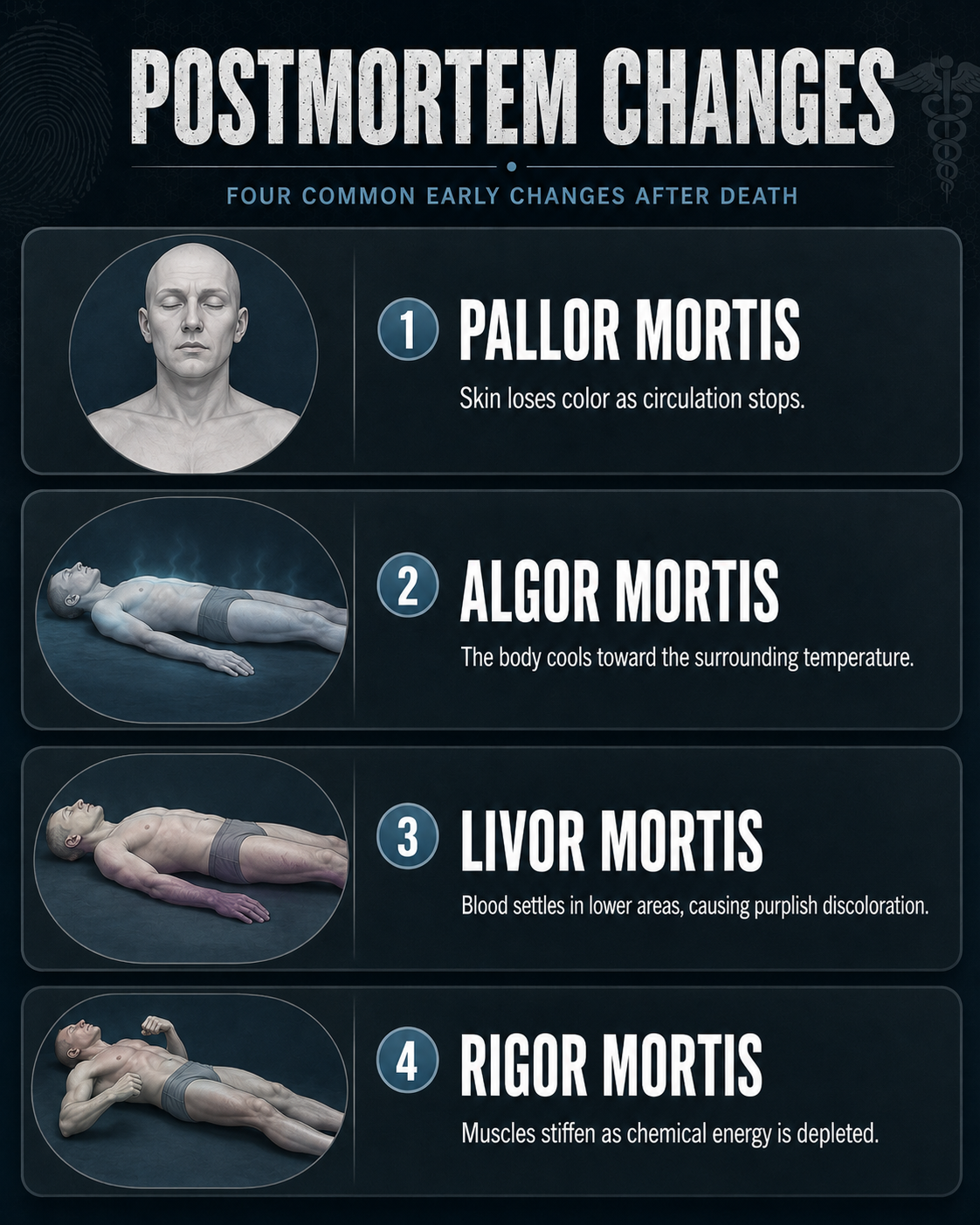
The process of bodily decay first begins with early postmortem changes:
Early Postmortem Changes
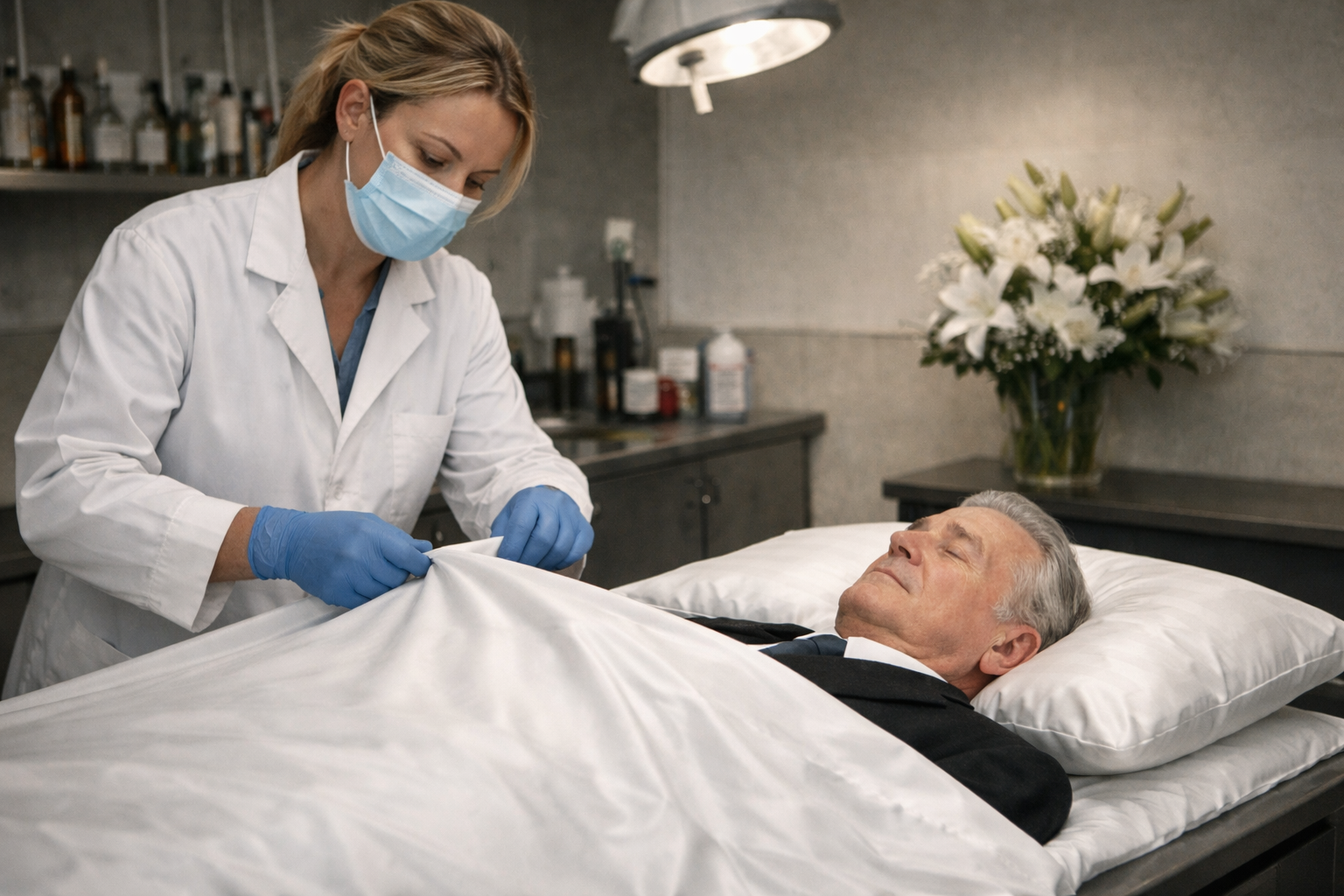
In the first minutes and hours, the body enters the early stages of death. These changes are often used in forensic work to estimate time since death, though temperature, clothing, illness, body size, and environment, which can all alter the timeline. Death timing can also impact the way a body is prepared for a funeral as well.
These changes are as followed:
Pallor Mortis
Skin begins to lose its normal tone as circulation stops. This paleness can appear fairly quickly, though it is not always obvious depending on complexion, lighting, and surrounding conditions.
Algor Mortis
The body gradually cools until it approaches the temperature of its surroundings. This is called algor mortis. It does not happen at a perfect rate, but forensic investigators may still use body temperature as one clue among many.
Livor Mortis
Blood settles by gravity into the lowest areas of the body. This creates purplish discoloration called livor mortis. Early on, the pattern may shift if the body is moved. Later, it becomes more fixed.
Rigor Mortis
Muscles first relax after death, then stiffen as chemical energy inside muscle cells is depleted. This stiffening is rigor mortis. It usually develops over several hours, reaches a peak, then fades as tissue breakdown advances.
The Body Begins to Decompose
Decomposition starts at the cellular level. Cells lose structural control. Enzymes begin digesting tissue from within, a process called autolysis. Bacteria, especially from the gut, spread into tissues that were previously protected by living immune systems.
This is where the body becomes less recognizable as an organism and more clearly a system being taken apart.
Stages of Decomposition
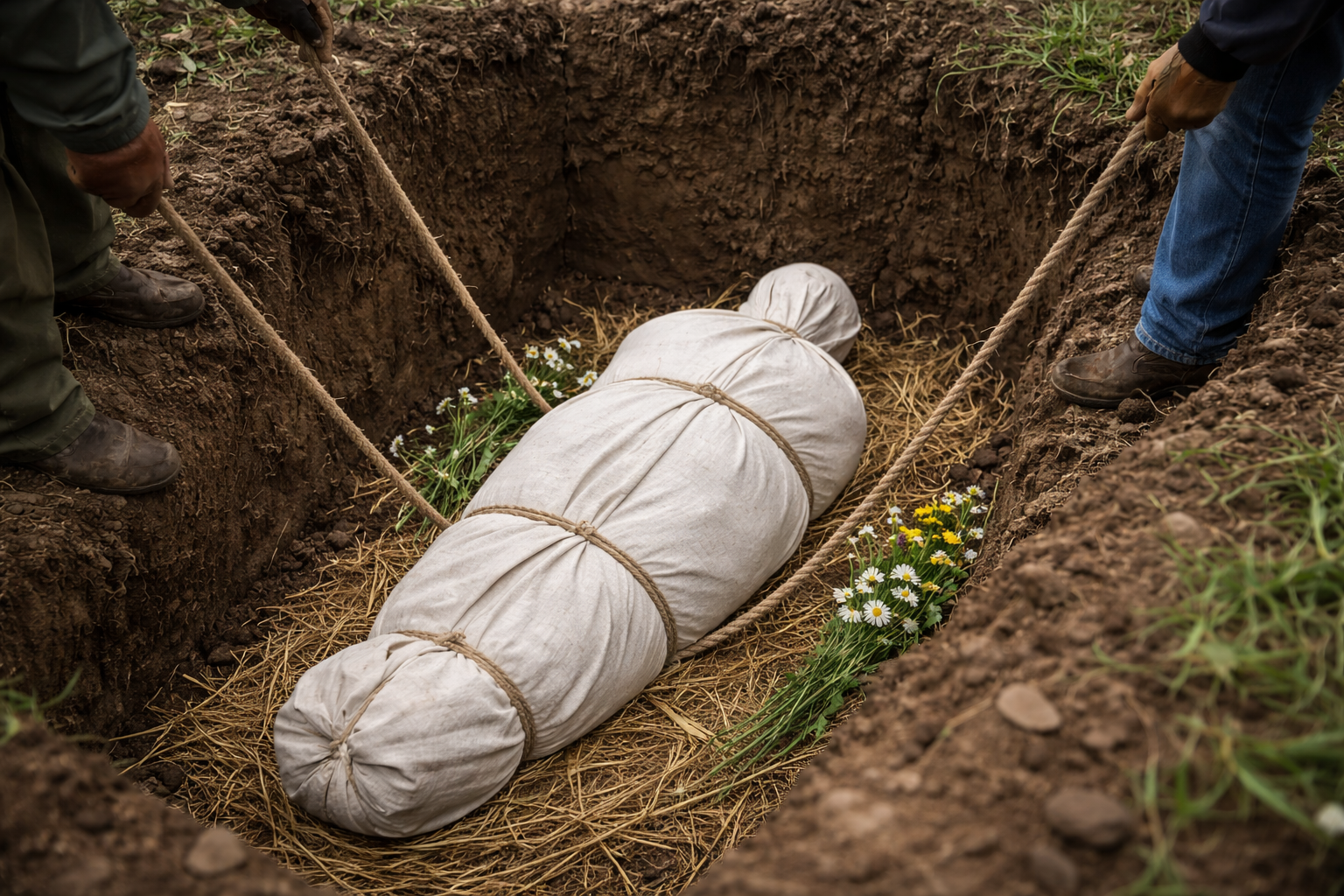
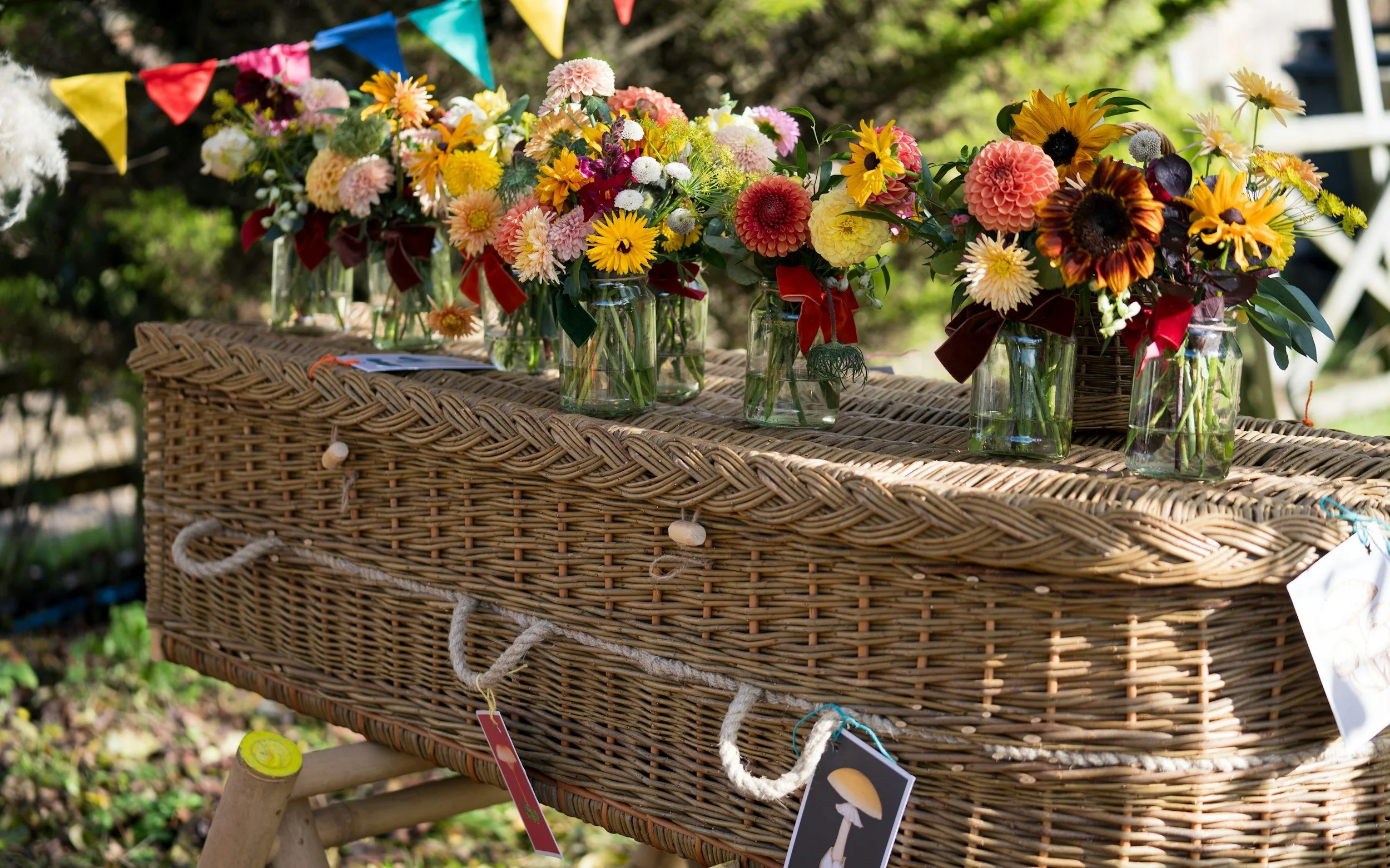
The stages of decomposition are often described in broad phases. Real bodies do not follow them neatly. A body in a hot, humid forest changes differently from one in cold water or a sealed indoor space. This is often why a natural burial can be completely different than a traditional burial. The process between the two can be distinct from one another.
Fresh Stage
The fresh stage begins immediately after death. Externally, the body may look mostly unchanged. Internally, oxygen loss, cellular failure, and early bacterial activity have already begun.
Bloat Stage
As bacteria break down tissues, gases accumulate. The abdomen may distend. Skin discoloration becomes more visible. Odor develops because of chemical compounds produced during putrefaction.
This stage is clinically important, but it is also why death has always carried such a strong place in human fear. The body remains present, but the rules governing it have changed.
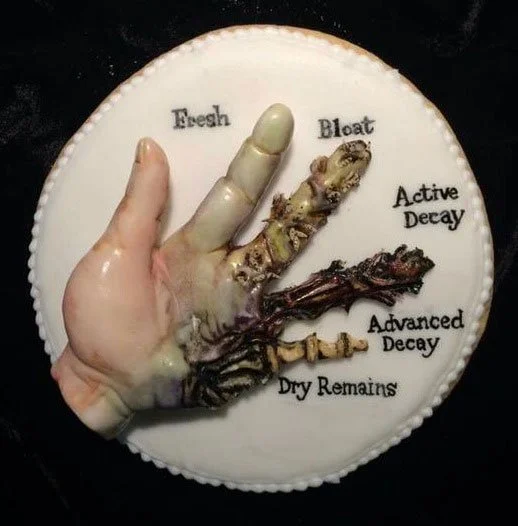
This anatomical model outlines a clear visual of the different stages of decay.
Active Decay
Fluids are released as tissues break down. Insects, if they have access, may become heavily involved. Soft tissues lose structure. Environmental exposure matters greatly here.
Forensic researchers study these patterns to better understand postmortem interval, which means the time between death and discovery. Facilities such as the University of Tennessee Forensic Anthropology Center study human decomposition under real environmental conditions.
Advanced Decay
Much of the soft tissue has been reduced or dried. Odor may lessen. Insect activity may change. Remaining tissue becomes leathery, waxy, or dry depending on the environment.
Dry Remains
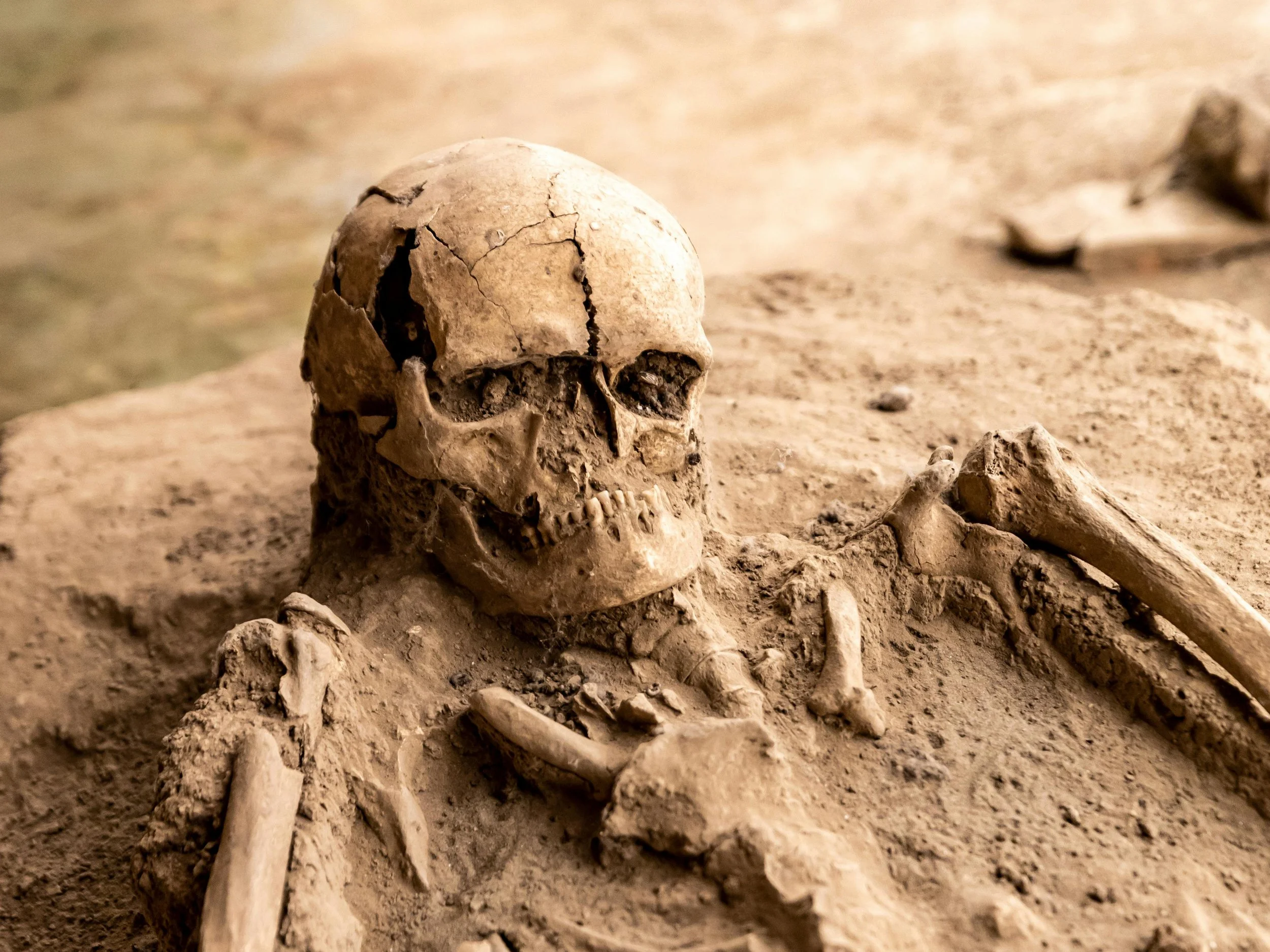
Eventually, bone, hair, cartilage, and dried tissue may remain. This final stage can last years, decades, or far longer depending on burial, moisture, scavenging, soil chemistry, and climate.
Writing Decomposition Scenes Without Overwriting Them
Decomposition scenes often fail for the same reason excessive violence does. Writers focus too heavily on physical detail and lose atmosphere, pacing, or emotional effect.
In horror literature, decomposition is usually more effective when it feels gradual, invasive, or strangely ordinary. The body becomes unfamiliar in small ways first. A smell that should not be there. Skin changing texture. A room that seems warmer than it should.
Clinical restraint tends to create more tension than graphic excess.
What Makes These Scenes Effective
A believable decomposition scene usually relies on:
sensory imbalance rather than shock
implication instead of exhaustive detail
environmental interaction
emotional reaction from witnesses
realistic timelines
Real decomposition is uneven and often slower than films suggest. A body does not instantly become skeletal, and dramatic collapse into dust is mostly cinematic shorthand.
Writers who understand the actual stages of decomposition can create scenes that feel grounded, which often makes them more disturbing.
Literary Examples of Decomposition in Horror
Decomposition has appeared in horror literature for centuries, though many writers approach it through atmosphere, corruption, and psychological unease rather than graphic detail. These works use bodily decay to reflect fear, loss, contamination, and the slow breakdown of what once felt familiar.
The Fall of the House of Usher by Edgar Allan Poe
Poe rarely describes decomposition in direct anatomical detail. Instead, decay spreads through the atmosphere of the story itself. Notably highlighting Madeline Usher’s life-like appearance as “the faint blush upon the bosom and the face" and "that suspiciously lingering smile upon the lip which is so terrible in death.”Pet Sematary by Stephen King
King uses subtle signs of bodily deterioration to create unease rather than relying entirely on graphic imagery. The horror comes from familiarity distorted by death, where loved ones return altered in small but unmistakable ways. For example, he reminds the audience that “The person you put up there ain't the person that comes back. It may look like that person, but it ain't that person.” The body, especially in this case, is more or less a vessel.Mexican Gothic by Silvia Moreno-Garcia
The novel connects bodily decay with architecture, inheritance, and illness. Decomposition becomes part of the environment itself, making the house feel alive in an unnatural way. When referring to the body of Agnes Doyle specially, Moreno-Garcia writes, “On a dais, her body is still there, frozen and sprouting mushrooms that erupt from all sides — it's the source of the buzzing Noemí had heard around the house,”
The Last Stage
The human body after death follows a process that is natural, clinical, and deeply uncomfortable to witness. Even when understood scientifically, decomposition still unsettles people because it slowly transforms something familiar into something unrecognizable, which is largely why we, as humans, continue to seek to understand it and it often becomes a cornerstone of horror literature.
READ MORE DEATH HORROR ENCYCLOPEDIA ENTRIES