What Makes a Creature Feel Unnatural?
There is a difference between something, such as a creature, feeling vaguely unfamiliar, versus something that feels downright wrong. When people try to define what makes a creature natural, they are often circling that distinction.
A natural creature fits within expectation, even if it is strange or dangerous. Your brain knows to stay away or not approach, and thus, you don’t. However, an unnatural one disrupts those expectations in small but noticeable ways. It makes you hesitate, and the more you hesitate, the more you are subconsciously on high alert.
It is in that primal space we will find your answer.
The Problem With Almost-Human
The fastest way to make something feel unnatural is to bring it close to human, then shift it just enough to break recognition.
To illustrate the point, think of a figure that stands upright, but leans slightly too far forward. Hands that look normal until the fingers bend a little too far. Eyes that focus, but not quite where they should. These could be normal, of course, but because they are subtly not what is expected, something feels off. It is the same way if you are out in public and a stranger holds your gaze just a little too long, or you are walking home and someone matches your footsteps just a little too closely.
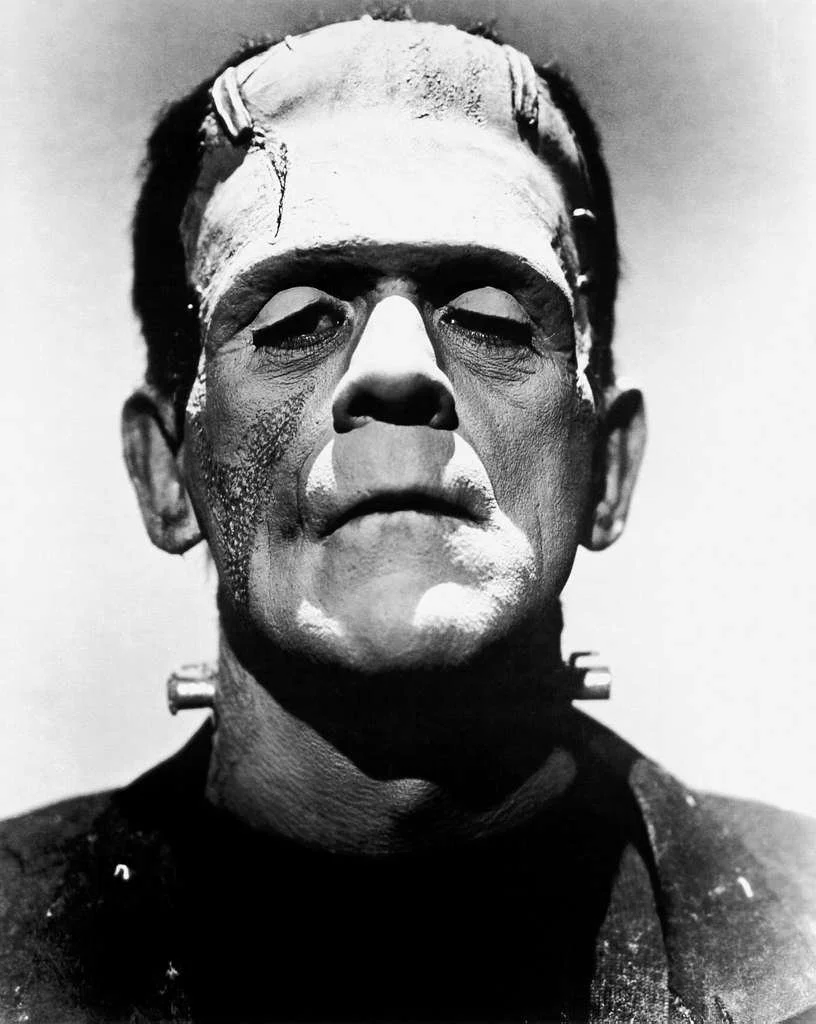
Boris Karloff as one of the most iconic vesions of Frankenstein’s Monster
Frankenstein's monster works because of this exact tension. The creature is built from human parts, yet the result feels incomplete. Not broken, not monstrous in the traditional sense. Just wrong in a way that is difficult to explain. Every version of “the monster” from the 1910 silent film to the 2025 Frankenstein film directed by Guillermo Del Toro tries to capture this otherness, each with varying degrees of success.
That “almost” is what lingers. If the creature were completely alien, it would be easier to fight, defend, or flee. Instead, as humans, we tend to buckle under this visual pressure cooker and freeze.
When Nature Breaks Its Own Rules
Before we talk about monsters again, consider that some of the most unsettling examples are not fictional at all.
There are unsettling animals that exist comfortably within their environments, yet feel out of place when observed too closely.
The axolotl, up until their recent popularity, was often described as eerie because its features do not change the way people expect. It keeps its juvenile form, with external gills and a fixed expression that never quite reads as alive or reactive. In fact, in ancient Aztec culture, they were considered the manifestation of the god Xolotl (twin brother of Quetzalcoatl), seeing them was said to bring bad luck and sickness.
Another example is the Blobfish, which, when first caught in 2003, was considered grotesque and horrifying. Later, scientists learned that its appearance was due to the animal being removed from its natural pressure. Its structure collapses into something soft and undefined, as if the shape it was meant to hold has disappeared.
These unsettling-looking animals are not unnatural in reality. But they feel that way because they break the patterns people rely on to understand living things. The animals you find unsettling may lean more towards insects or reptiles, or anything that does not belong in your environment or that you have not seen before.
When Form, Movement, and Purpose Don’t Align
Unnatural creatures often share one thing in common. Something about them does not match.
It might be how they move. It might be how they are built. Sometimes it is something you cannot even name. Again, the feelings of strangeness happen on a primal, personal level.
Consider some of the following attributes:
A body that looks heavy but moves too quickly.
Limbs that bend in ways that do not support the weight they carry.
Features that seem placed without intention.
This is where many unsettling monsters in real life come from as well. Not in the sense of mythology, but in the sense of legends, which are born from stories of “I could have sworn I’ve seen something out there.”
The brain tries to sort what it sees. Animal. Human. A mix of both or something completely new and horrifying.
When your mind cannot make sense of what it is seeing, the result is unease.
Monsters in Media
Horror tends to exaggerate these ideas, but it rarely invents them from nothing.
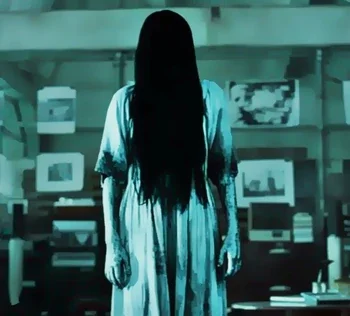
Samara Morgan from the film The Ring (2002)
In The Ring (2002), the figure of Samara is not visually complex. After all, if we break this “monster” down at the most basic level, it is a little girl with black, stringy, long, dirty hair. What makes her unsettling, however, is the way she moves and the way in which her face is almost always hidden.
Let’s focus on movement for a second. Samara is known for:
Jerky pauses
The unnatural pacing
The way her body seems to resist its own motion
Visually, it comes off very creepy!
Every unsettling monster design works because they follow the same principles seen in real life. They distort expectation just enough that the viewer cannot fully process what they are seeing.
Recognition starts, then fails.
Create Your Own Unsettling Monster
Think of three real animals you find unsettling. They do not have to be dangerous. In fact, it works better if they are traditionally not.
Write down what feels off about each one. For example:
Eyes that are too large or too still
Skin that looks too smooth or too loose
Limbs that feel excessive or misplaced
Movement that is too slow or too fast
Teeth that do not match what it eats (such as vegetation or vice versa)
Then combine those traits. You do not have to combine every single trait, but focus on at least three.
The goal is not entirely to create something new, but rather to take familiar elements and cause them to give your audience unease.
READ MORE MONSTER HORROR ENCYCLOPEDIA ENTRIES